HAYDEN ISLAND RESIDENTS SAY IBR “CHECKED A BOX, NOT ANSWERED QUESTIONS” IN HINOON BRIEFING
News Release from Neighbors For A Better Crossing Inc
Posted on FlashAlert: November 24th, 2025 9:23 AM
Downloadable file: Interstate Bridge – photo credit Kimberly Haslett
Downloadable file: HiNooN letter of questions and concerns sent to IBR
Community cites technical concerns, missing data, and new op-ed questioning ground testing on Hayden Island
PORTLAND, OR / HAYDEN ISLAND – Neighbors for a Better Crossing (NFBC) is raising serious concerns about the Interstate Bridge Replacement (IBR) program’s recent presentation to the Hayden Island Neighborhood Network (HiNooN), stating that the November briefing on “ground improvement testing” felt more like a scripted outreach exercise than a genuine attempt to inform the community or answer residents’ questions.
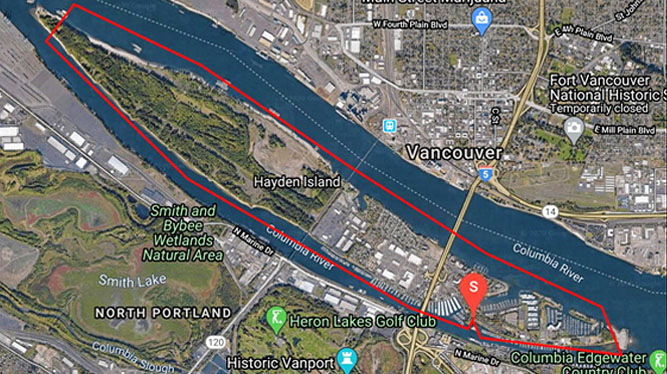
During HiNooN’s Board meeting on November 13, IBR staff outlined a $1.9 million “ground improvement” test project scheduled to begin the first week in December at the former ODOT motor carrier site on Hayden Island. The staging ite has already been set and work will involve jet grouting, vibro–stone column installation, and deep soil mixing—methods intended to “strengthen” local soils ahead of their proposed bridge construction.
Video of IBR discussion with HiNooN: https://youtu.be/Y4mzHKdD7Yk
Hayden Island residents, and two civil engineers, Bob Ortlblad and Robert Wallis, who have done extensive research on the proposed bridge, repeatedly asked how this testing relates to:
- The seismic risk of the existing I-5
- The feasibility of retrofitting the current structures; and
- The true long-term impacts of a massive new bridge on the island’s homes, businesses, and environment.
Those questions were largely deflected or left unanswered.
“We appreciated that IBR finally showed up for Hayden Island, but this felt like a PR box they needed to check, not a conversation they were prepared to have,” said Gary Clark, founder of NFBC. “Our engineers asked very specific technical questions about seismic risk and soil stabilization. IBR’s own resident engineer admitted he hadn’t reviewed key prior studies, and we never got clear answers about why the existing bridge cannot be retrofitted or stabilized.”
“The IBR proposal is either incompetence or corruption,” said Bob Ortblad, MSCE, MBA, during the meeting. “The region is being misled about seismic risk, cost, and viable alternatives. A tunnel is safer, cheaper, and better — and it avoids the destruction of Hayden Island”
Ortblad reinforced his views in an op ed piece he published after the meeting questioning why IBR is spending nearly $1.94 million on ground improvement testing in what he describes as “solid and well-drained sand” on Hayden Island, given that future bridge approaches and transit station structures are expected to be supported on deep drilled shafts or piles that bypass weak surface soils. Clark County Today
Ortblad notes that:
- IBR already has roughly $13 million worth of geotechnical studies and drilled shaft tests in the Columbia River from the earlier Columbia River Crossing (CRC) project and more recent Clark County Today.
- A new 2024 Geotechnical Data Report for the Columbia River and North Portland Harbor—only released via public disclosure request—documents extensive boulders and cobbles that make construction of 96 planned drilled shafts technically challenging and potentially very costly. com
- IBR’s Hayden Island ground-improvement web page links the need for this testing to the “seismic vulnerability” of the existing bridge’s timber piles in liquefiable soils, a connection Ortblad characterizes as misleading given the very different conditions and foundation systems involved.
Ortblad’s analysis raises the same questions residents raised in the meeting, “If IBR already has extensive in-river geotechnical data, why are they now drilling in Hayden Island sand and using that to justify their narrative about the existing bridge’s foundations?”
Key issues raised – and not answered – in the HiNooN meeting
During the HiNooN briefing, residents and engineers asked IBR to address:
Seismic risk and retrofitting the existing bridge
- Whether soil-hardening methods being tested on Hayden Island (jet grouting, stone columns, deep soil mixing) could also be applied around the existing I-5 bridge timber piles under the river.
- Why a serious, transparent, stand-alone seismic risk report on the current bridges has never been released, despite years of public claims about imminent collapse. Clark County Today
Use and value of the Hayden Island ground improvement tests
- How drilling in raised, well-drained island sand will meaningfully inform the design and cost of 10-foot diameter, 250-foot-deep drilled shafts in the Columbia River.
Noise, vibration, contamination, and health impacts
- What noise and vibration levels residents should expect from test drilling and later full construction, especially for nearby floating homes and marinas.
- How dust, slurry, and groundwater changes will be monitored and reported, and how the community can be assured that contamination will not spread to wetlands and marinas.
Transparency, visuals, and bridge height over Hayden Island
- Why, after years of requests and public records filings, IBR still refuses or is unable to provide basic numerical information such as the height of the proposed bridge over Hayden Island despite having produced detailed 3D fly-through videos.
- Why side-view renderings and height data specific to Hayden Island have not been shared, despite FOIA requests, even as design proceeds and soil tests begin.
The IBR staff frequently responded with:
- References to ongoing federal environmental review and the need to “wait” for the final Supplemental Environmental Impact Statement (SEIS) before answering certain questions.
- Promises of future communications, “office hours,” and internal
- General statements about “no secrets” and a “comprehensive website” – without providing the concrete numbers, thresholds, or commitments residents requested.
“We asked how loud it will be, how long it will last, what protections we’ll have if our homes, docks, or shoreline are damaged, and what the actual bridge height will be over our island,” said Clark “We were pointed to a website that is difficult to navigate and a hotline. That is not the level of transparency or accountability this project demands.”
Displacement of Homes and Businesses
The Draft SEIS indicates:
- 43 homes will be displaced
- 32–35 businesses will be acquired
- 600–742 employees will face economic disruption
Yet no clear compensation framework has been communicated to residents.
“The island is being treated as collateral damage,” said Kimberly Haslett, a Hayden Island resident who volunteers on multiple community advocacy committees.
Health, Noise, and Air Quality Impacts — From IBR’s own Health Analysis
The Interstate Bridge Replacement Program Health Analysis conducted by the Washington State Department of Health, Oregon Health Authority, Multnomah County Health Department, and others warn of:
Operational & Construction Noise
- Floating homes near the North Portland Harbor will experience 66–69 dBA, exceeding federal noise
- Chronic noise exposure is linked to sleep disruption, heart disease, cognitive impairment, and stress, especially in children.
“The Modified LPA would approach or exceed noise abatement criteria at 65 locations… Noise walls are the only mitigation proposed.” — IBR Health Analysis
Air Quality & Diesel Emissions
- Increased construction activity will elevate particulate matter (PM2.5 and PM10).
- Diesel emissions are linked to asthma, lung disease, and increased cardiovascular risk, disproportionately affecting sensitive populations.
“We have residents who may lose their homes and have no idea where they will go. Businesses may shutter from years of detours and construction. IBR talks about impacts on freight and transit—but not the health, livelihood, and property damage impacts for people who live here, said Haslett.”
Tolling Burdens that Will Harm Hayden Island Residents and Small Businesses
IBR continues to advance a tolling plan despite widespread community opposition.
“Tolling will devastate island residents, especially low-income families who rely on this crossing daily for groceries, medical appointments, and work. It will hurt small businesses that are already struggling.” said Haslett.
Residents emphasize that tolling revenue is needed only because IBR chose the most expensive and least cost-effective bridge design while ignoring cheaper alternatives. Clark County Today
Pattern of Withheld or Incomplete Information
NFBC and Hayden Island residents see this meeting as part of a broader pattern in which:
- Critical technical information, such as the 2024 Geotechnical Data Report documenting serious boulder problems for drilled shafts, has only surfaced through public disclosure requests rather than proactive
- Alternatives such as an immersed tube tunnel—which independent engineers note will actually reduce traffic congestion, allow future expansion, dramatically cut noise and air-pollution impacts, shorten construction timelines, lower overall costs, and preserve the existing bridges for transit, bicycles, and pedestrians—have been dismissed or downplayed in IBR’s own tunnel “concept assessment,” a report later shown to contain major quantity and cost errors. Clark County Today, Clark County Today
“The geotechnical assumptions being used by IBR are inconsistent with real-world precedent. Many of the claimed risks to the existing bridge can be mitigated with retrofit solutions IBR refuses to evaluate.” said retired Civil Engineer, Robert Wallis, who was the lead engineer on the two biggest public marina projects in Washington and has considerable design and engineers experience on wood piling in the Columbia River. A Civil Engineers Assessment of the Decision to Reject a Tunnel
“When outside engineers have to drag key geotechnical reports into the daylight with public records requests, and when basic questions about bridge height over our homes still can’t be answered, trust is understandably low,” Clark added. “This is not how a $7–10 billion megaproject should be managed.” Clark County Today
What Neighbors for a Better Crossing and Hayden Island are calling for
Following the HiNooN meeting and considering Ortblad’s recent op-ed, NFBC and HiNooN Hayden are calling for:
- Full transparency on geotechnical data and objectives
- Immediate public release, in one place, of all major geotechnical reports, including the 2024 Geotechnical Data Report and prior CRC studies.
- A clear explanation of how Hayden Island ground tests will materially inform in-river shaft design, costs, and risk.
- A stand-alone, independent seismic risk assessment of the existing I-5 bridges
- Produced by experts independent of IBR’s current design consultants and publicly released in full. Neighbors for a Better Crossing
- Detailed, Hayden Island–specific construction impact disclosure
- Real numbers for expected noise and vibration
- Clear plans for air and water quality
- A written, accessible process for documenting and compensating structural damage to homes, docks, marinas, and shoreline caused by testing and construction.
- Accurate visuals and dimensions
- Release of bridge heights over Hayden Island and river, with labeled cross-sections and side-view renderings from key residential and marina viewpoints.
- Serious reconsideration of tunnel alternatives
- Inclusion of an immersed tube tunnel option, evaluated by an independent consultant, in any final federal review, as previously urged by Ortblad and other transportation experts. clarkcountytoday.com
Hayden Island has more than 3,000 residents, numerous small businesses, marinas, and a unique river habitat. We are not expendable. Before a historic bridge is demolished and billions more are committed, the public deserves honest numbers, real alternatives, and a federal review process that isn’t driven by pre-selected outcomes.
Neighbors for a Better Crossing will continue to work with Hayden Island residents, business owners, engineers, and regional advocates to ensure that any interstate crossing solution is safe, fiscally responsible, environmentally sound, and genuinely transparent.
HiNooN shared the following letter of questions and concerns with IBR prior to the November 13, meeting and requested a formal reply within 30 days.
– – –
November 13, 2025
Meghan Hodges, IBR Community and Government Relations Manager
Nathan Potter, IBR Construction Resident Engineer Interstate Bridge Replacement Program
500 Broadway, Suite 200
Vancouver, WA 98660
Dear Meghan and Nathan,
On behalf of the Hayden Island Neighborhood Network, local residents, local businesses, marina and floating-home
communities, and the ecosystems of the Columbia River adjoining our island, we write to express our serious and growing concern regarding the Draft Supplemental Environmental Impact Statement (SEIS) published by your program, and the manner in which the IBR Project has engaged with our community.
Our Concerns
The proposed demolition of the historic I-5 bridge and construction of a new crossing—already billions of dollars over budget, not approved by the U.S. Coast Guard, offering no measurable improvement to traffic congestion, and still lacking a completed environmental review—will have massive, long-term consequences for our community of more than 3,000 residents.
The Health Analysis prepared by regional health departments confirms what our community has long feared: that this project will exceed federal noise thresholds, disturb toxic river sediments, displace homes and businesses, and create disproportionate impacts on vulnerable communities such as ours.
These include, but are not limited to:
Extensive years of pile-driving, drilling, heavy construction, vibration and noise that will directly affect houses, condos, floating homes, docks, businesses, the Columbia River, and the marina environment on Hayden Island.
Loss of property and displacement of both residents and island businesses—many of whom will be forced to relocate or shut down permanently due to demolition, detours, and loss of access.
Environmental risks including disturbed river sediments, water-quality threats, impacts to fish and wildlife habitat, and lasting ecological strain on the river corridor.
Structural risks to the island itself, including potential soil liquefaction, sinkholes, cracking, and shoreline collapse from years of planned vibration and drilling.
Public health impacts from sustained air and noise pollution, increased stress, and cardiovascular and respiratory illness — issues the IBR has yet to address in any meaningful way.
Economic burdens and equity impacts on our residents who depend on the bridge for daily access to groceries, medical care, work and essential services—particularly when tolling is factored in.
Insufficient transparency and accountability: our community’s requests for side-view renderings, vibration and noise monitoring data, detailed construction schedules, and assurances of compensation for property damage have been either ignored or inadequately addressed.
Unanswered Questions
We respectfully demand written, detailed responses to the following:
- What specific vibration and noise thresholds will apply during pile driving and drilling phases, and how will these be monitored in real time for the benefit of homes, condos, floating homes, residents, and businesses?
- What protections and compensation processes are in place if homes, properties, docks, or floating residences sustain damage (cracking, settling, structural shift) due to ground improvement or construction?
- Will IBR commit to a written compensation and mitigation agreement for every resident and business affected by displacement or relocation? How will fair market value, business losses, and moving expenses be determined and guaranteed?
- How will IBR address air quality, particulate emissions, and health risks to residents who will be exposed for years to dust, diesel exhaust, and noise-related stress? If medical impacts occur, how will residents seek compensation for uncovered healthcare costs?
- How will the program ensure water quality protection during in-water work that disturbs hazardous sediments and toxics like PCBs and PAHs?
- What is the full construction timeline and phasing plan for Hayden Island, including major noise, vibration, and access disruptions?
- How will tolling and detours impact residents who depend on bridge access for essential services, and what mitigation or toll relief will be offered?
- Will an independent third-party monitoring entity be established with the authority to measure compliance, report findings publicly, and enforce accountability when residents experience harm?
Community Concessions and Commitments we Expect
To rebuild trust and protect the health, safety, and livelihoods of Hayden Island residents, we request the following:
- A comprehensive written compensation and relocation agreement for all displaced residents and businesses, including those indirectly affected by long-term construction impacts.
- Real-time environmental and noise monitoring stations on Hayden Island, with public data access and
- Transparent construction maps and renderings showing staging areas, vibration zones, and truck
- A clear, accessible compensation process for property or health-related damages, with independent assessment and timely resolution.
- Resident toll-relief and mitigation funds recognizing Hayden Island’s lack of alternative access and the disproportionate burden we will bear.
- An independent oversight committee that includes Hayden Island representatives, environmental experts, and health professionals to ensure IBR accountability.
- A dedicated community liaison assigned solely to Hayden Island, to maintain ongoing communication, publish updates, and ensure that no concern goes unaddressed.
Our community will continue to engage proactively and respectfully, but we cannot ignore the real and documented risks this project poses to Hayden Island’s residents, businesses, and environment. Without meaningful transparency, accountability, and enforceable protections—especially given the cost, scale, and duration of this project—our neighborhood, our marine life, and our homes will suffer the consequences.
We request a formal written response to these concerns and questions within 30 days. Sincerely,
Hayden Island Neighborhood Network (HiNooN) MyHaydenIsland.com